
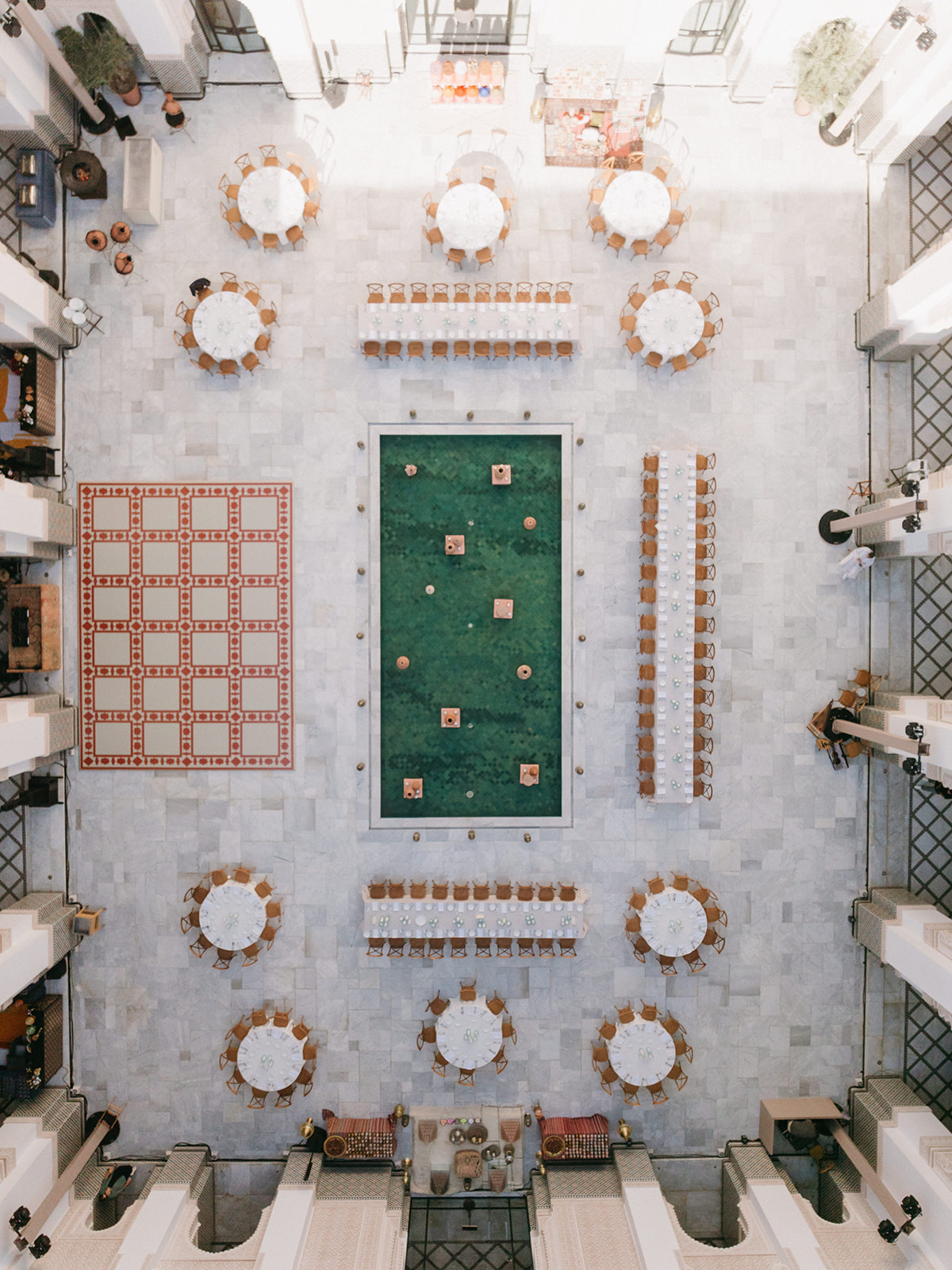

Where Asia Meets Marrakech: Inside Four Unforgettable Destination Weddings
There's a reason Marrakech keeps showing up on the shortlist for couples planning their wedding thousands of miles from home. Terracotta walls, hidden riad courtyards, olive groves beneath the Atlas Mountains, and a desert that turns gold at sunset — it's a city built for celebration. In recent years, it's become an especially popular choice for Asian couples looking to host multi-day, multi-tradition weddings that blend centuries-old rituals with a completely new cultural backdrop.
We looked at four real weddings planned by Party Maroc — spanning Chinese, Indonesian, and Indian traditions — to see what makes Marrakech such a compelling stage for these celebrations, and what each couple did to make their heritage feel completely at home in Morocco.
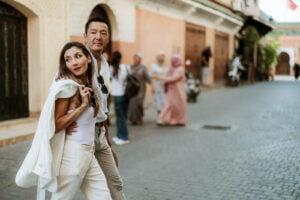
A Chinese Wedding at Jnane Tamsna: Irene & Viktor
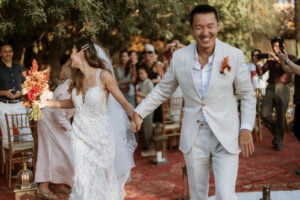
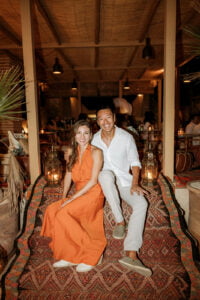
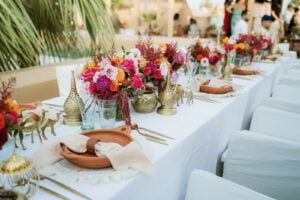
Irene and Viktor, a couple based in Singapore, chose Marrakech for a wedding that fused their Chinese heritage with Moroccan design. Their guests arrived to a welcome dinner on the rooftop of Ryad Dyor, where a traditional Chinese tea ceremony was staged among vibrant fuchsia and orange florals — a warm, intimate start to the weekend.
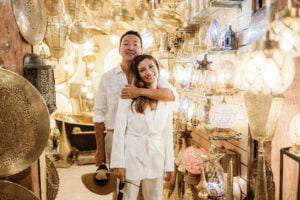
The following day brought a guided tour through the Marrakech Medina, taking in the souks, carpet stalls, and the city's famous lantern shops, before the ceremony itself at Jnane Tamsna. The aisle was lined with red and gold Moroccan carpets and lanterns, and two camels flanked the entrance as Irene walked down the aisle with her father — a striking meeting point between Chinese wedding red and Moroccan ceremonial tradition. The reception that followed leaned into elegant white and peach floral design, gold accents, and live Moroccan music and dance, rounding out a wedding that felt both timeless and unmistakably layered with two cultures.


Where Indonesia Met Morocco: Angie & Ranggaz
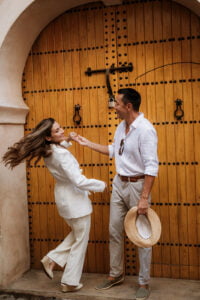
Angie Prijanto and Ranggaz Laksmana brought more than one hundred guests from Indonesia for a wedding weekend split across two dramatically different settings: an exclusive kasbah beneath the Atlas Mountains, and the Agafay Desert.
The wedding day itself unfolded at the kasbah, with luxurious floral arrangements and handcrafted décor drawing on Morocco's natural materials and craftsmanship. For Ranggaz, whose Muslim heritage gave Morocco particular meaning, the choice of destination carried real significance beyond the scenery.
The second day moved the celebration into the Agafay Desert for a post-wedding gathering that leaned fully into Moroccan tradition — camel rides across the golden terrain, live Andalusian musicians, folkloric performers, and fire shows as the sun went down. The highlight came when the couple made their entrance in a traditional Ammariya, one of Morocco's most iconic wedding customs, giving their Indonesian guests a genuine taste of local heritage rather than just a backdrop. With influential guests and content creators in attendance, the wedding also reached a global audience online — turning a private celebration into a showcase of Moroccan hospitality for millions of viewers.





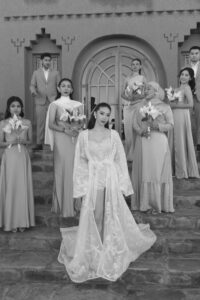
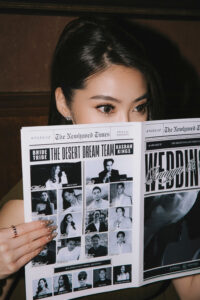
A Grand Indian Wedding at The Oberoi: Mittra & Parth
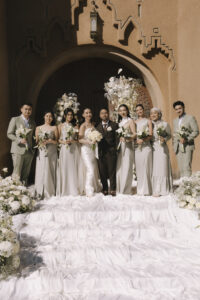
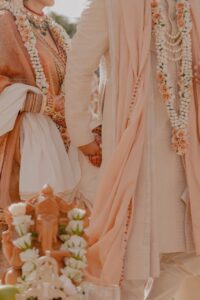
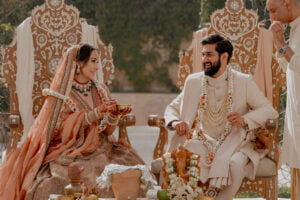
For Mittra and Parth, a New York–based couple with Indian heritage, Marrakech hosted a two-day celebration for two hundred guests at The Oberoi Marrakech — and it may be the most ritual-rich of the four weddings.
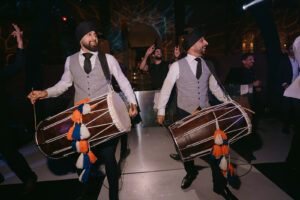
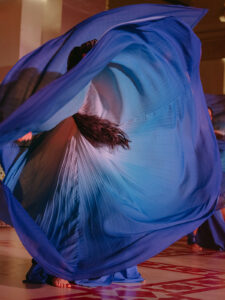
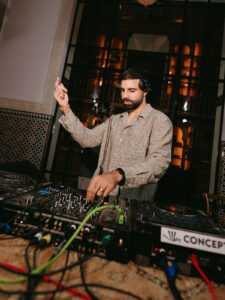
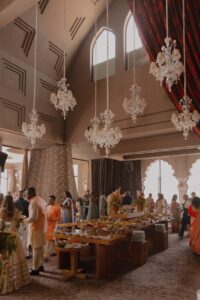
Day one opened with a Haldi ceremony reimagined as an immersive Indian marketplace among the property's olive groves, complete with live Pani Puri stations, bangle stalls, henna artists, and a spontaneous pool-jump that became one of the weekend's most memorable moments. As evening fell, the Sangeet drew inspiration from Marrakech's Jemaa el-Fnaa square — candlelit terracotta pots, mint tea stations, Gnawa performers, and a set from DJ Kabir that carried the party into the night.
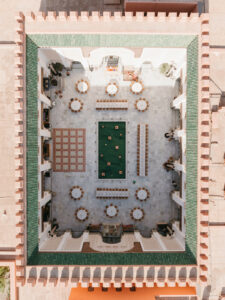
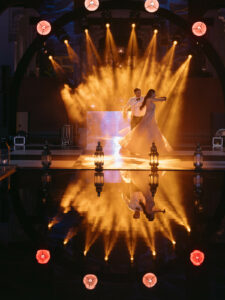
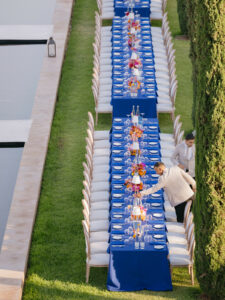
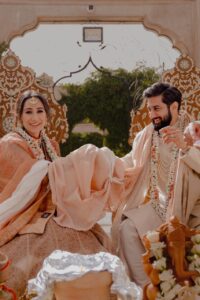
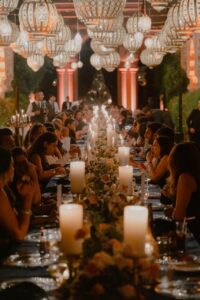
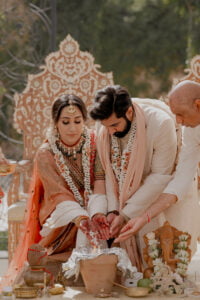
Day two began with Parth's Baraat entrance on horseback, followed by a full Hindu ceremony in The Oberoi's courtyard: the Jaan Aagman, Ganesh Puja, Kanyadhan, Agni Homam, Mangal Pheras, Saptapadi, and the final rites of Sindhoor and Mangalsutra, each performed with the couple's families gathered close. A Thali lunch beneath the olive trees and a candlelit reception along The Oberoi's Grand Canal closed out the weekend — a wedding designed, as the couple put it, around experience rather than a single event.
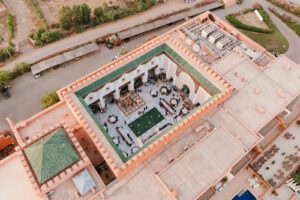
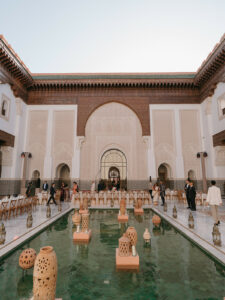
Four Days, Four Moods: Janki & Nilen
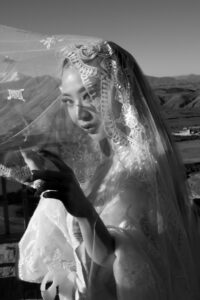
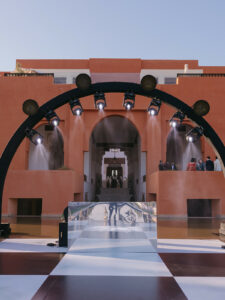
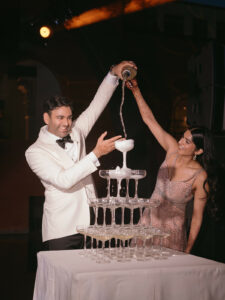
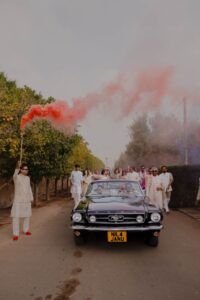
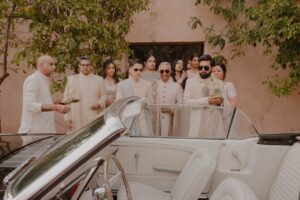
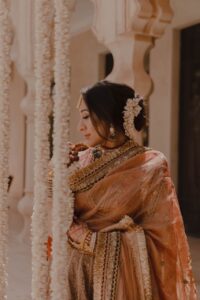
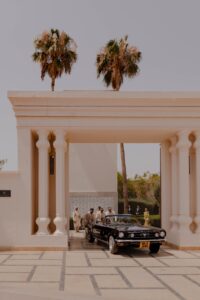
Janki and Nilen's Marrakech wedding stretched across four days and several venues, each with its own distinct atmosphere. It opened with an intimate white wedding set against the Atlas Mountains at a Kasbah venue, chosen for its earthy sunset tones. The next morning brought a Mehndi at Villa Namaskar, followed that evening by an Art Deco–themed welcome cocktail in black, gold, and emerald.
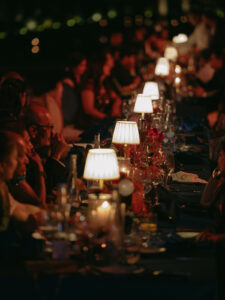
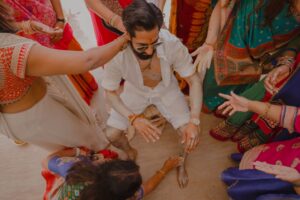
Day three combined a traditional Vidhi ceremony — poojas inviting Ganesh's blessing and a Haldi to prep the skin before the big day — with a lighter note in the afternoon: a pool party with a DJ. The wedding closed on day four with a Hindu ceremony beneath the Mandap, followed by a reception, dinner, and after-party at Palais Namaskar, a venue whose kitchen is well versed in Indian cuisine — no small detail when feeding a multi-day, multi-course Indian wedding.

What Makes Marrakech Work for Asian Weddings
A few threads run through all of these celebrations:
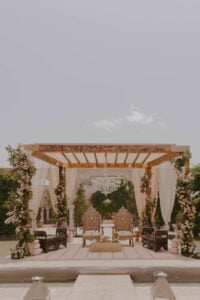
The venues flex to fit the ritual. Kasbahs, riads, and palace-style properties like The Oberoi and Palais Namaskar have the courtyards, gardens, and open-air spaces that Hindu ceremonies, Haldi celebrations, and multi-day Chinese or Indonesian customs actually need — a Mandap under the stars, an aisle lined with lanterns, a marketplace built into an olive grove.
Morocco's own traditions add rather than compete. Camel entrances, Ammariya processions, Gnawa musicians, and Andalusian ensembles don't dilute a couple's heritage — they layer a second culture on top of it, which is part of why these weddings photograph and feel the way they do.
Multi-day formats suit multi-day traditions. Chinese tea ceremonies, Indian Sangeets and Baraats, and Indonesian customs all come with their own sequence of events — and Marrakech's wedding infrastructure is set up to host a proper wedding weekend, not just a single ceremony.
Local food knowledge matters. More than one of these weddings specifically called out working with chefs experienced in Indian or other Asian cuisines — a detail that's easy to overlook and hard to get right without local expertise.
Planning Your Own Destination Wedding in Marrakech
If there's one common denominator across Irene & Viktor, Angie & Ranggaz, Mittra & Parth, and Janki & Nilen, it's that none of these weddings happened by accident. Coordinating international guest lists, sourcing vendors who understand specific cultural rituals, and translating a couple's heritage into Moroccan settings takes local knowledge and a lot of moving parts handled well in advance.
Marrakech continues to prove itself as a destination that doesn't ask couples to choose between their culture and their setting — it gives both room to shine.
To read the full stories and see complete photo galleries, visit their wedding portfolio.